In today’s fast-paced technological landscape, the Internet of Things (IoT) is revolutionising various industries, including electronics manufacturing. Smart soldering stations equipped with IoT capabilities provide numerous benefits that enhance efficiency, accuracy, and safety in soldering processes. This article explores the top ten advantages of these advanced tools, ranging from real-time monitoring and predictive maintenance to improved collaboration and a competitive edge. Discover how IoT-enabled soldering stations can transform your workflow and elevate your projects.
Explanation of IoT and its Role in Soldering Stations
The Internet of Things (IoT) represents a significant technological advancement that connects devices and systems to enhance efficiency and monitoring capabilities across various industries, including manufacturing.
In the context of smart soldering stations, IoT enables communication between devices and systems, facilitating real-time monitoring and predictive maintenance. This technology is essential for optimising the soldering process, ensuring precise temperature control, and reducing oxidation build-up, ultimately improving performance and operator safety. For a deeper understanding of these advancements, see also: Smart Soldering Workstations.
Smart soldering stations are equipped with sensors that monitor temperature fluctuations and solder quality, allowing them to automatically adjust settings to maintain optimal conditions, thereby decreasing defects in solder joints.
The ability to collect data in real-time enables operators to make informed decisions and ensure consistency in production. Additionally, remote access enables technicians to oversee multiple stations, troubleshoot issues, and ensure compliance with safety standards from any location.
This not only streamlines operations but also enhances workplace safety by minimising the risks associated with manual monitoring and handling.
Benefits of IoT-Enabled Smart Soldering Stations
IoT-enabled smart soldering stations offer numerous benefits, particularly in optimising the soldering process for high-precision components.
Features such as real-time monitoring, precise temperature control, and predictive maintenance significantly reduce human errors and enhance overall manufacturing efficiency. One of our hidden gem articles, How IoT is Transforming Soldering in Automotive Electronics, delves deeper into these advancements and their implications in the industry.
Increased Efficiency and Productivity
IoT-enabled smart soldering stations significantly enhance efficiency and productivity in manufacturing processes by automating routine tasks with smart technology and providing operators with real-time data analysis. This automation process allows for high throughput, which reduces the time spent on each soldering task while maintaining strict quality control.
Furthermore, these advanced features streamline workflows and enable operators with actionable insights that enhance their decision-making capabilities. For example, the integration of sensors allows for real-time monitoring of temperature and solder quality, preventing defects before they occur. This proactive approach minimises waste and ensures consistent performance across production lines.
Data analytics tools compile performance metrics, enabling continuous improvement initiatives that adapt to changing manufacturing demands. By leveraging IoT integration and connected devices, manufacturers can not only increase productivity but also achieve more sustainable operations through optimised resource usage and reduced downtime.
Improved Accuracy and Precision
One of the most significant advantages of IoT-enabled smart soldering stations is their capacity to provide greater accuracy and precision during the soldering process. Features such as precise temperature control and optimised thermal contact ensure consistent solder joint quality, which is crucial for soldering high-precision components like electronic components and preventing oxidation buildup.
By employing sophisticated algorithms and real-time monitoring, these systems can adjust the tip temperature based on dynamic conditions, significantly reducing the likelihood of overheating or underheating. The soldering tips are designed to maximise heat transfer and allow for a quick response to thermal fluctuations, resulting in enhanced wettability and bond strength.
Improvements in tip geometry, such as iron plating and copper core composition, further boost performance, enabling operators to achieve high-quality solder joints even when working with sensitive circuitry. The integration of these technologies not only enhances the soldering process but also prolongs the lifespan of electronic components by minimising thermal stress.
Time and Cost Savings
IoT-enabled smart soldering stations provide significant time and cost savings by minimising calibration cycles and reducing damage caused by human errors.
Predictive maintenance enables operators to address issues before they escalate into costly repairs. These smart soldering stations utilise advanced sensors and real-time data analytics to monitor wear and tear on installed components.
Predictive maintenance ensures that maintenance is performed only when necessary, extending the lifespan of the stations and ensuring smoother workflows by preventing unplanned downtime that could disrupt production schedules.
Manufacturers have reported up to a 30% reduction in operational costs due to fewer calibration cycles and lower error rates, resulting in savings of thousands of pounds annually. These financial metrics highlight the clear value of predictive maintenance and underscore the importance of minimising calibration requirements.
Enhanced Safety and Ease of Use
According to Govind Kannan’s blog on industrial IoT, enhanced safety and ease of use are significant advantages of IoT-enabled smart soldering stations, which are often integrated into the design of such systems.
One notable feature is a smart identification system that ensures operators use the correct equipment and settings for their specific soldering needs, thereby reducing workplace hazards. These stations typically include temperature control features that prevent overheating, minimising the risk of burns or damage to the equipment.
Additionally, the user interface is designed with intuitive controls that guide operators through various functions and includes real-time data displays for performance and safety parameters. Comprehensive operator training programmes that cover best practices and emergency procedures further enhance safety.
The combination of these features streamlines the soldering process and fosters a safer workplace, significantly reducing the likelihood of accidents.
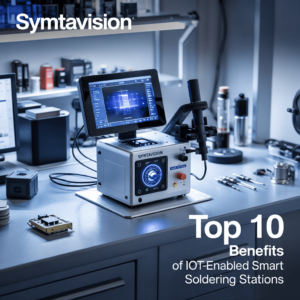
Top 10 Benefits of IoT-Enabled Smart Soldering Stations
IoT-enabled smart soldering stations offer several benefits, including real-time monitoring, adaptive control, data analysis, machine learning, predictive maintenance, remote access and control, as well as improved safety.
These advantages significantly enhance productivity and quality control in the soldering process, while also minimising human error and operational costs.
1. Real-time Monitoring and Control
Real-time monitoring and control are essential features of IoT-enabled smart soldering stations, enabling operators to continuously oversee the soldering process and make necessary adjustments.
This capability provides valuable data analytics that help maintain optimal temperature and solder joint quality. Advanced technologies such as cloud computing and machine learning algorithms enable these systems to not only collect data but also analyse it, predicting potential issues before they occur.
Intuitive dashboard designs in user interfaces allow operators to visualise soldering parameters in real-time, enhancing their control and decision-making capabilities in line with digital advancements. Alert notifications and remote access features of real-time monitoring systems enable operators to quickly address any deviations in the soldering process, ensuring consistency and minimising errors.
The IoT integration of devices not only boosts productivity but also fosters a more flexible working environment, allowing for swift adjustments to meet specific production requirements, ultimately enhancing manufacturing efficiency.
2. Remote Access and Troubleshooting
A key feature of IoT-enabled smart soldering stations is the capability for remote access and troubleshooting, enabling technicians to assess and resolve issues without being physically present on-site.
This connectivity not only enhances maintenance efficiency but also improves response times to operational problems. By utilising cloud-based platforms, technicians can quickly identify issues, perform firmware updates, and adjust operational settings from a distance.
For instance, if soldering operations indicate temperature inconsistencies, technicians can swiftly modify temperature profiles remotely, thereby minimising production downtime.
Real-time analytics can alert maintenance crews to potential equipment failures before they occur, resulting in lower costs and increased productivity. The shift to remote troubleshooting optimises operational efficiency and fosters collaboration among teams that may be distributed globally, transforming traditional maintenance practices in the manufacturing sector.
3. Data Collection and Analysis
Data collection and analysis are essential for optimising the performance of IoT-enabled smart soldering stations, providing valuable insights into the soldering process. By utilising this data, manufacturers can implement predictive maintenance and enhance their processes to achieve greater manufacturing efficiency.
Continuous monitoring of key metrics such as temperature control, solder flow rates, and cycle times enables real-time adjustments that minimise defects and improve overall quality. Additionally, analysing historical data trends helps to identify equipment wear patterns, which can facilitate better spare parts inventory management.
Examining key performance indicators, such as first-pass yield and downtime, allows manufacturers to identify bottlenecks in their operations and take preventive measures. This level of insight not only enhances productivity but also fosters a culture of data-driven decision-making, ensuring that all aspects of the soldering processes are optimised, including calibration required for accuracy.
4. Customised Workflows and Settings
IoT-enabled smart soldering stations facilitate customised workflows and settings that cater to specific production requirements, enhancing flexibility and control for operators, ensuring user safety. This adaptability ensures that the soldering process aligns with diverse project needs and manufacturing goals.
For example, in electronics manufacturing, different components, such as surface mount devices (SMDs) and through-hole parts, may require distinct temperature profiles and soldering durations to achieve optimal results. A project involving the assembly of intricate circuit boards might necessitate precise, low-temperature soldering techniques to prevent damage to sensitive components, while a high-volume production line may prioritise speed, requiring faster solder application, supported by smartheat technology.
This nuanced control not only improves the quality of the final product but also minimises waste and reduces operational costs, making the integration of customisation into the soldering process an invaluable asset for modern manufacturers, enhancing their smart factory capabilities.
5. Compatibility with Other Tools and Systems
Compatibility with other tools and systems is a significant advantage of IoT-enabled smart soldering stations, as it facilitates their integration into existing production lines and enhances automation, leveraging IoT integration.
This ensures that manufacturers can retain their current tools while transitioning to more advanced technology. When smart soldering stations can communicate with inventory management systems or quality control software within a production environment, they help streamline processes and minimise downtime, supporting process optimization.
For instance, these soldering stations can automatically adjust their settings based on real-time production requirements or notify operators when component supplies are running low. This level of interoperability enhances production efficiency and reduces the likelihood of manual setting errors.
By investing in compatible IoT solutions, organisations can maximise their return on investment while gradually upgrading their workflows.
6. Predictive Maintenance and Reduced Downtime
Predictive maintenance is a vital feature of IoT-enabled smart soldering stations, as it reduces downtime and enhances process optimization, ensuring constant temperature control. By leveraging real-time data and analytics, operators can better anticipate maintenance needs, thereby minimising disruptions in the manufacturing process.
This shift enables production teams to transition from reactive to proactive approaches, allowing for maintenance schedules that are more closely aligned with actual equipment performance. For example, companies have reported reductions of approximately 30% in unplanned downtime and increases in overall equipment effectiveness (OEE) of up to 15%.
Continuous monitoring through predictive maintenance ensures that machines operate at optimal efficiency for extended periods, resulting in substantial cost savings. Additionally, the use of machine learning algorithms enables operators to identify trends in equipment usage, enableing them to make informed decisions that drive operational excellence.
7. Improved Quality Control and Traceability
IoT-enabled smart soldering stations enhance the overall quality and traceability of the manufacturing process by ensuring that each solder joint meets stringent requirements.
These stations are essential in industries that work with high-precision components, such as high precision components, where even the smallest detail can make a significant difference.
8. Enhanced Collaboration and Communication
The enhanced collaboration and communication capabilities of IoT-enabled smart soldering stations promote a more cohesive working environment, allowing teams to share insights and updates in real time, facilitated by microprocessor driven technology. This interconnectedness is crucial for streamlining operations and improving overall efficiency.
The integration of such advanced technologies not only increases productivity but also fosters innovative problem-solving approaches among team members. As information flows seamlessly, individuals are more inclined to contribute ideas and solutions, creating a rich tapestry of collective expertise.
This dynamic exchange improves team dynamics, enabling quicker decision-making processes and reducing the likelihood of misunderstandings. Ultimately, when collaboration is prioritised in project management, teams are better equipped to meet deadlines and achieve desired outcomes, paving the way for sustained success.
9. Flexibility and Adaptability for Different Projects
The flexibility and adaptability of IoT-enabled smart soldering stations make them suitable for a wide range of projects, from small-scale endeavours to large manufacturing runs, including the use of industrial revolution techniques. This capability allows manufacturers to swiftly pivot and adjust their soldering processes as needed.
For instance, in the automotive industry, where model specifications change rapidly, smart soldering stations enable manufacturers to easily switch between different setups with minimal downtime.
In the electronics sector, consumer goods manufacturers can optimise their workflows by adjusting soldering parameters on demand, aligning production precisely with market demand. This adaptability not only enhances operational efficiency but also supports effective project management, allowing teams to allocate resources more efficiently and respond to changes in real time.
Ultimately, this leads to improved project outcomes across various industries.
10. Competitive Advantage and Future-Proofing
IoT-enabled smart soldering stations provide manufacturers with a competitive advantage and future-proofing by positioning them to adapt to an ever-changing marketplace and rapidly evolving technologies, which is essential in the age of Industry 4.0.
The adoption of smart technologies enhances operational efficiency and improves the production process by reducing waste and enhancing quality control, a hallmark of Industry 4.0.
Moreover, the incorporation of real-time data analytics enables predictive maintenance, minimising downtime and fostering a culture of innovation. Manufacturers that embrace IoT technologies can leverage actionable insights to optimise their supply chains and enhance decision-making processes, ensuring quality customer services.
This adaptation not only helps manufacturers secure their position in the marketplace but also ensures they remain agile and responsive to emerging trends, including the use of electric power solutions. As we have witnessed the rapid changes in electronics manufacturing with the rise of China and the Internet, it is clear that many more transformations lie ahead.